Official CADAC Mauritius Website

How to Clean a BBQ: Maintenance Tips

Keep your BBQ performing at its best with a simple BBQ care and cleaning routine adapted to Mauritius’ tropical climate and CADAC’s cooking systems.
Reading time: 9–10 minutes
Quick Answer
If you’re wondering how to clean a BBQ, the process is simpler than many people expect. After cooking, allow the appliance to cool to a safe handling temperature before removing the cooking surface. Wash removable components with warm water, mild dish soap and a soft sponge or brush, then empty the grease tray and wipe down both the interior and exterior of the BBQ. Finally, dry every component thoroughly before reassembling or covering the unit.
Many current CADAC cooking accessories feature GreenGrill ceramic coating, which should be cleaned using non-abrasive tools and cleaners. Avoid steel wool, metal scrapers and aggressive chemicals that may damage the cooking surface.
For the best long-term results, combine quick cleaning after every use with a more thorough inspection every few weeks, especially if your BBQ is regularly exposed to humidity or coastal air.
💡 Good to Know
Cleaning removes grease and food residue. Maintenance goes one step further by checking burners, inspecting components, protecting surfaces and ensuring your BBQ continues to perform safely over time.
At a Glance
✓
Light clean after every use
✓
Allow around 15–30 minutes after cooking
✓
Use mild soap and non-abrasive cleaning tools
✓
Dry every component thoroughly before reassembly
✓
Deep clean and inspect your BBQ every 1–2 months
A simple and consistent cleaning routine will help protect your BBQ from grease, humidity and unnecessary wear.
In This Guide
By the end of this guide, you’ll know how to:
- Clean your BBQ safely after every cook.
- Care for different cooking surfaces without damaging them.
- Adapt your maintenance routine to Mauritius’ tropical climate.
- Prevent grease build-up and unnecessary wear.
- Create a simple maintenance schedule that keeps your BBQ ready year-round.
Why BBQ Maintenance Matters in Mauritius
Outdoor cooking is part of everyday life in Mauritius. Unlike regions where barbecues are stored away for several months each year, many households use their BBQ throughout every season. More frequent use naturally leads to more grease, food residue and exposure to the elements, making regular maintenance an essential part of ownership.
The local climate also creates conditions that deserve a little extra attention. High humidity, seasonal rainfall and prolonged exposure to sunlight can all affect outdoor equipment over time. For homes located near the coast, airborne salt may also accelerate corrosion on exposed metal components if they are not cleaned and dried regularly.
None of these conditions mean that your BBQ requires complicated maintenance. Instead, they highlight the importance of adopting a simple routine that removes grease, prevents moisture from remaining trapped and allows you to spot small issues before they become larger ones.
A few minutes of maintenance after cooking is often enough to help preserve both the appearance and performance of your BBQ.
Why Regular Maintenance Makes a Difference
Cleaning your BBQ consistently offers benefits that go beyond appearance. A well-maintained BBQ is generally easier to cook on, easier to clean after each use and less likely to experience unnecessary wear caused by accumulated grease or neglected components.
Regular maintenance can help you:
- Remove grease before it hardens into stubborn deposits.
- Reduce the likelihood of flare-ups caused by excess fat.
- Protect cooking surfaces by avoiding unnecessary scraping.
- Keep burners and gas ports free from grease and debris.
- Extend the lifespan of removable cooking accessories.
- Identify worn or damaged components before they affect performance.
Although no maintenance routine can completely prevent normal wear over time, regular care can significantly reduce avoidable deterioration and help your BBQ continue performing as intended.
🌴 Mauritius Tip
If your BBQ is stored outdoors, allow every component to dry completely before fitting a protective cover. Covering a damp BBQ may trap moisture inside, particularly during periods of high humidity or after rainfall.
Cleaning vs. Maintenance: What’s the Difference?
These terms are often used interchangeably, but they refer to two different aspects of BBQ care.
Both routines complement each other. Regular cleaning reduces the amount of deep maintenance required, while periodic maintenance helps ensure your BBQ continues to operate safely and efficiently.
Step-by-Step: How to Clean Your BBQ
Cleaning your BBQ after every use is the simplest way to keep it performing well while reducing the amount of deep maintenance required later. Rather than waiting until grease and burnt-on residue become difficult to remove, a few minutes of routine care can help protect cooking surfaces and make every future clean easier.
The process below applies to most gas BBQs and many current CADAC models. Because accessories and cooking surfaces may vary, always refer to your product manual for model-specific instructions.
Step 1 – Turn Off the BBQ and Allow It to Cool
Before cleaning, turn off the gas supply and allow the BBQ to cool to a safe handling temperature.
Avoid cleaning while cooking surfaces are extremely hot. Sudden temperature changes caused by cold water or cleaning products can place unnecessary stress on certain materials and may reduce the lifespan of some cooking surfaces.
At the same time, don’t wait until grease has completely hardened. A slightly warm cooking surface is often easier to clean because food residue has not yet fully set.
💡 CADAC Tip
If food residue has started to dry, place a damp cloth over the cooking surface for a few minutes before cleaning. This helps soften stubborn deposits without aggressive scrubbing.
Step 2 – Remove the Cooking Surface
Most modern CADAC BBQs are designed with removable cooking accessories, making cleaning easier than trying to work inside the appliance.
Depending on your setup, this may include:
- BBQ Grid
- Grill Plate
- Chef Pan
- Paella Pan
- Pizza Stone
- Pot Stand
Removing each component allows you to clean every surface more thoroughly while preventing grease from accumulating underneath.
Before washing, remove any loose food debris using a soft BBQ brush or a non-metal scraper suitable for your cooking surface.
Step 3 – Clean the Cooking Surface Correctly
Different materials require different cleaning methods. Using the wrong tool can shorten the life of the cooking surface, even if it appears to remove dirt more quickly.
GreenGrill Ceramic-Coated Surfaces
Many current CADAC cooking accessories feature GreenGrill ceramic coating, which is designed to provide a durable, non-stick cooking surface when properly maintained.
For routine cleaning:
- Wash with warm water and mild dish soap.
- Use a soft sponge or a non-abrasive brush.
- Allow stubborn residue to soak before cleaning
- Dry thoroughly before storing.
Avoid:
- Steel wool
- Metal scrapers
- Abrasive scouring pads
- Harsh chemical cleaners unless specifically recommended
Gentle cleaning helps preserve the ceramic coating, extends the lifespan of the cooking surface and makes future cleaning much easier.
For most routine BBQ cleaning, warm water, mild dish soap and non-abrasive cleaning tools are all you need. This simple approach is suitable for regular maintenance and helps protect GreenGrill ceramic-coated cooking surfaces.
If your BBQ has accumulated stubborn grease, burnt-on food residue or heavier build-up, however, a dedicated BBQ cleaner can make cleaning easier while remaining suitable for routine maintenance.
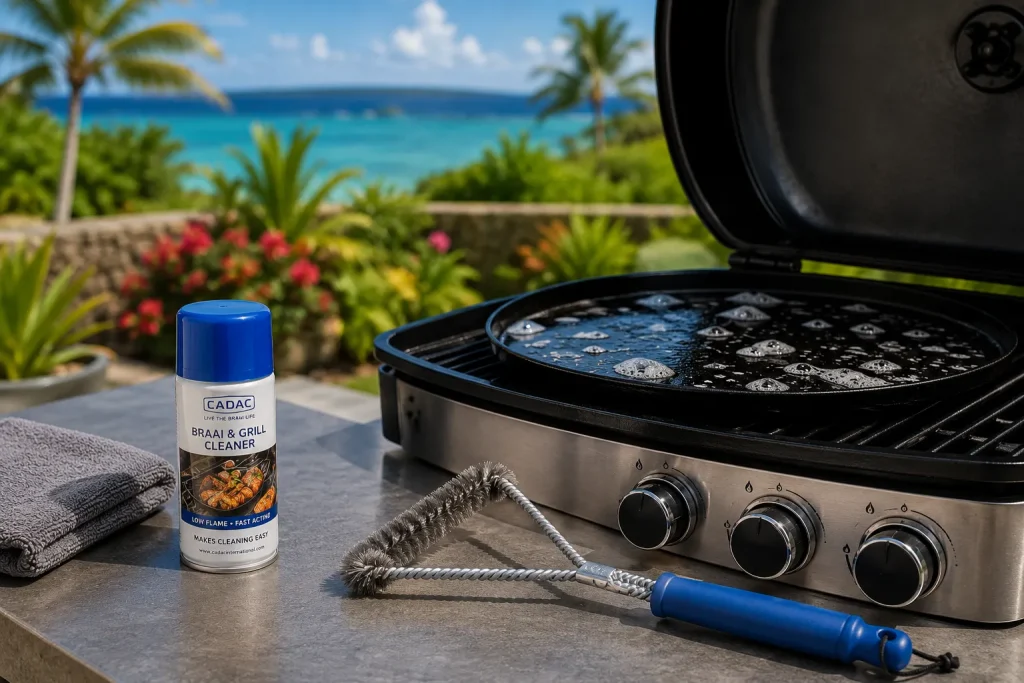
Suitable CADAC cleaning products include:
- CADAC BBQ Cleaner 400ml – Helps remove stubborn grease and burnt-on residue while remaining suitable for regular BBQ maintenance.
- CADAC 46 cm BBQ Brush – Ideal for removing food residue before washing and for cleaning cooking surfaces without excessive scrubbing.
Enamelled Cooking Surfaces
Enamelled surfaces are durable but can become chipped if handled roughly or cleaned with excessive force.
Use warm soapy water together with a soft sponge or nylon brush, and avoid striking the surface against hard objects during cleaning or storage.
Stainless Steel Components
Some parts of your BBQ, such as shelves, burners, lids or internal components, may be made from stainless steel.
To keep them looking their best:
- Remove grease with warm water and mild detergent.
- Wipe in the direction of the steel’s grain where visible.
- Dry immediately with a clean cloth to reduce water spotting.
Near the coast, regular rinsing and drying can also help remove salt deposits that may accumulate on exposed metal surfaces over time.
💡 Good to Know
Stainless steel is highly resistant to corrosion, but “stainless” does not mean “maintenance-free.” Regular cleaning helps preserve both its appearance and long-term durability.
Step 4 – Empty and Clean the Grease Tray
The grease tray is often overlooked, yet it plays an important role in keeping your BBQ operating cleanly and safely.
After cooking:
- Remove the grease tray once it has cooled.
- Dispose of grease responsibly.
- Wash the tray using warm water and dish soap.
- Dry it completely before replacing it.
Allowing grease to accumulate over multiple cooking sessions increases cleaning time and may contribute to unwanted flare-ups during future use.
Step 5 – Clean the Inside of the BBQ
Once the cooking surface has been removed, take a few minutes to clean the cooking chamber.
Use a soft brush or cloth to remove loose food particles, grease residue and ash where applicable.
Pay particular attention to:
- the area beneath the cooking surface;
- grease channels;
- burner covers (if fitted);
- corners where grease tends to collect.
This is also a good opportunity to visually inspect the burners. They should appear clean and free from obvious food debris or grease build-up.
Do not insert sharp objects into burner ports, as this may affect the gas flow or damage the burner.
Step 6 – Clean the Exterior
The exterior of your BBQ is exposed to more than cooking. Dust, grease splashes, fingerprints, rain, pollen and coastal air can all accumulate over time, particularly if the BBQ is stored outdoors.
After each use, wipe the exterior surfaces with a soft cloth, warm water and a mild detergent. This simple step helps prevent grease from baking onto the lid during future cooking sessions while keeping the BBQ looking its best.
For stainless steel components, wipe in the direction of the grain whenever possible to reduce visible streaks and maintain a clean finish. Dry all exterior surfaces immediately after cleaning to minimise water spots, especially in humid conditions.
Avoid abrasive powders, steel wool and highly corrosive cleaning products unless they are specifically recommended for the material you are cleaning.
🌴 Mauritius Tip
Even if your BBQ is protected by a cover, airborne dust and salt particles can settle on exterior surfaces over time. A quick wipe-down every few weeks helps preserve the finish and reduces long-term build-up.
Step 7 – Dry Every Component Before Reassembly
Drying is one of the most overlooked steps in BBQ maintenance.
Once all components have been cleaned, use a clean microfibre cloth or allow them to air dry completely before putting the BBQ back together.
Pay particular attention to:
- removable cooking accessories;
- grease trays;
- burner covers;
- joints and corners where water may collect.
Leaving moisture trapped between components can encourage unnecessary staining and increase maintenance requirements over time, particularly in tropical climates.
If you have washed your BBQ late in the afternoon or after rainfall, allowing it to dry naturally in a sheltered, well-ventilated area before fitting the cover is often the best approach.
Step 8 – Store Your BBQ Properly

Proper BBQ storage is just as important as proper cleaning. Storing your BBQ correctly helps protect it from humidity, dust, rain and prolonged UV exposure while reducing unnecessary maintenance between cooking sessions.
If your BBQ is portable, store it in a dry location whenever possible once it has cooled and all components are completely dry.
For larger outdoor BBQs, using a well-fitted protective cover helps shield the appliance from rain, dust and prolonged UV exposure. However, a cover should never be used to hide a dirty or damp BBQ.
Instead, follow this simple sequence:
- Clean the BBQ.
- Dry every component thoroughly.
- Reassemble the appliance.
- Fit the protective cover.
- Store in the most sheltered location available.
This routine takes only a few extra minutes and can significantly reduce the amount of cleaning required before your next barbecue.
Related Guide
Looking for long-term storage advice? Read our guide on How to Store Your BBQ Between Uses to learn how to protect your BBQ during periods of inactivity and throughout the wetter months of the year.
The CADAC Perspective
A well-maintained BBQ doesn’t just stay cleaner—it continues to deliver the cooking experience it was designed for.
Many current CADAC cooking accessories feature GreenGrill ceramic coating, developed to provide a durable cooking surface that is easy to clean when cared for correctly. Rather than relying on aggressive scraping after every cook, regular cleaning with warm water, mild detergent and non-abrasive tools helps preserve the coating and maintain its performance over time.
One of the advantages of many CADAC BBQs is their modular cooking system, which allows different cooking accessories—such as a BBQ Grid, Grill Plate, Chef Pan or Paella Pan—to be removed individually for cleaning. This makes it easier to access areas beneath the cooking surface and encourages a more thorough cleaning routine after each use.
Like any outdoor cooking equipment, however, performance depends on regular care. Even the best materials benefit from simple habits such as removing grease promptly, drying components completely and inspecting burners periodically.
By combining these practices with the care recommendations provided for your specific BBQ model, you can help keep your equipment ready for reliable outdoor cooking throughout the year.
BBQ Maintenance Schedule
Regular maintenance doesn’t have to be time-consuming. Most BBQ care consists of a few simple habits performed consistently rather than infrequent deep cleans.
The schedule below provides a practical routine suitable for most gas BBQs. Depending on how often you cook, your environment and your specific model, you may need to adjust the frequency.
Use this BBQ maintenance checklist as a simple reference to keep your barbecue clean, safe and performing at its best throughout the year. While every BBQ owner has different cooking habits, following this routine will help reduce grease build-up, prevent unnecessary wear and make regular maintenance much easier.
*Always follow your BBQ manufacturer’s safety instructions. If you suspect damage to the gas hose or regulator, discontinue use until the component has been inspected or replaced.
💡 Expert Tip
Frequent light cleaning is more effective than occasional intensive cleaning. Removing grease while it is still fresh significantly reduces cleaning time and helps preserve cooking surfaces.
Common BBQ Cleaning Mistakes to Avoid
Even with the best intentions, a few common mistakes can reduce the lifespan of your BBQ or make cleaning more difficult than necessary.
1. Waiting Too Long Before Cleaning
Grease and food residue become much harder to remove once they have cooled completely and hardened.
A quick clean after each cooking session usually requires only a few minutes and helps prevent stubborn build-up.
2. Using Abrasive Cleaning Tools
Steel wool, metal scrapers and aggressive scouring pads may remove burnt-on residue quickly, but they can also damage certain cooking surfaces.
Many current CADAC cooking accessories feature GreenGrill ceramic coating, which is designed to be cleaned using non-abrasive tools and mild detergents.
Whenever possible, allow residue to soften before attempting to remove it.
3. Forgetting the Grease Tray
The grease tray is often hidden from view, making it easy to overlook.
However, accumulated grease can become difficult to clean and may contribute to unnecessary flare-ups during future cooking sessions.
Emptying the tray after each use only takes a minute and makes future maintenance much easier.
4. Covering the BBQ While It’s Still Damp
Protective covers shield your BBQ from rain, dust and UV exposure, but they should never trap moisture inside.
Always allow every component to dry completely before replacing the cover, particularly during periods of high humidity or after rainfall.
5. Ignoring Small Maintenance Issues
Cleaning provides an ideal opportunity to inspect your BBQ.
While wiping down the appliance, look for:
- loose handles or fasteners;
- worn cooking accessories;
- blocked burner ports;
- damaged gas hoses;
- excessive corrosion or unusual wear.
Addressing small issues early is often simpler than waiting until they affect cooking performance or require replacement parts.
Good Practice
Think of cleaning as an inspection rather than a chore. Spending an extra minute checking the condition of your BBQ can help prevent unexpected problems later in the season.
Frequently Asked Questions
How often should I clean my BBQ?
A light clean should be performed after every cooking session. This includes cleaning the cooking surface, emptying the grease tray and wiping away food residue before it hardens.
A more thorough inspection and deep clean every one to two months is usually sufficient for most home BBQs, although frequent users may wish to inspect their BBQ more regularly.
Can I leave my BBQ outside all year in Mauritius?
Yes, many BBQs are designed for outdoor use. However, Mauritius’ tropical climate means they are exposed to humidity, rainfall and prolonged UV exposure throughout the year.
Using a properly fitted cover and ensuring the BBQ is clean and completely dry before storage will help protect it between uses.
If possible, store the BBQ in a sheltered, well-ventilated area rather than leaving it fully exposed to the elements.
Can I use oven cleaner on my BBQ?
Not necessarily.
Some strong oven cleaners contain chemicals that may not be suitable for certain cooking surfaces or finishes.
Before using any specialist cleaning product, check that it is compatible with the material you are cleaning and follow the manufacturer’s recommendations.
Warm water, mild dish soap and non-abrasive cleaning tools are sufficient for routine maintenance in most situations.
Should I clean my BBQ while it is still warm?
A slightly warm BBQ is often easier to clean than one that has cooled completely because grease and food residue have not yet fully hardened.
However, never attempt to clean a BBQ that is too hot to handle safely, and avoid pouring cold water onto very hot cooking surfaces.
What is the best way to remove burnt-on food?
Instead of scraping aggressively, allow stubborn residue to soften first.
Soaking removable cooking accessories in warm, soapy water or placing a damp cloth over the cooking surface for several minutes often makes burnt-on food much easier to remove.
This approach is generally gentler on the cooking surface than excessive scrubbing.
How do I protect my BBQ from rust?
The best way to prevent rust on your BBQ is through proper cleaning and drying. Keep your BBQ clean, dry it thoroughly after washing and avoid trapping moisture beneath a protective cover. Regular inspections also help identify areas where corrosion may begin so they can be addressed early.
Do GreenGrill ceramic-coated surfaces require special care?
Many current CADAC cooking accessories feature GreenGrill ceramic coating.
To help preserve the coating:
- clean with warm water and mild detergent;
- use soft sponges or non-abrasive brushes;
- avoid steel wool and metal scrapers;
- dry the surface before storing.
Always refer to your specific product manual for model-specific care instructions.
When should I replace a cooking accessory?
Consider replacing a cooking accessory if it has become significantly damaged, no longer performs as intended or cannot be cleaned safely.
Minor cosmetic marks are often normal after regular use and do not necessarily affect cooking performance.
If you are unsure whether a component should be replaced, consult your product documentation or contact your local CADAC retailer.
Conclusion
Regular BBQ care and maintenance are among the simplest ways to protect your investment and enjoy better outdoor cooking throughout the year. By removing grease after every use, inspecting key components periodically and storing your BBQ correctly, you can reduce unnecessary wear while keeping your equipment ready for your next meal.
For BBQ owners in Mauritius, a little extra attention to drying and storage goes a long way. Humidity, rainfall and coastal air are all part of the local environment, but they do not need to become maintenance problems when a consistent routine is in place.
Whether you cook every weekend or only on special occasions, a few minutes of care after each barbecue will help your BBQ continue performing reliably for years to come.
Ready to Keep Your BBQ in Top Condition?
Everything you need for effective BBQ cleaning and long-term maintenance is available from CADAC Mauritius. Explore our range of BBQ cleaning products, cleaning brushes and maintenance accessories to make regular BBQ care quicker, easier and more effective.
Once your BBQ is clean and completely dry, protect it between every barbecue with a fitted CADAC BBQ cover designed for your model.